
“Roast your pumpkin at 350℉ for one hour, until lightly browned and soft – then show it to your mash and immediately throw it in the trash. Proceed with brewing a normal beer.” This was the advice given to me at one of my first homebrew club meetings nearly 8 years ago when I dared ask if anyone had attempted a pumpkin ale. Pumpkin beers are frequently maligned, but I intend to thwart that misconception. Even though most curmudgeonly of beer enthusiasts can enjoy pumpkin ale, if brewed properly!
Pumpkin beer gets a lot of flack in the brewing community but I couldn’t disagree more; perhaps it’s due to nostalgia, but why wouldn’t I want a beer that is reminiscent of my favorite dessert from the best holiday of the year (in my humble opinion)? Besides, is there any other flavor that truly typifies Autumn? I do, however, feel that the market is flooded with ill-conceived and poorly-made pumpkin beers. Many are cloyingly sweet, or taste of nothing but cloves, while lacking the complex malt flavors needed to back-up such a strong flavor profile. While there is nothing inherently wrong with this, and certainly many people like these (breweries certainly wouldn’t keep making them if they weren’t selling!), I prefer a bit more complex of a flavor. For the last several years, I’ve brewed up a pumpkin beer to accompany my Thanksgiving feasts, previous successful examples have included a pumpkin Belgian Dubbel and a pumpkin Wee Heavy Scotch ale.
This year, I’ll be going a bit more traditional, repeating a recipe that I’ve had great success with in the past. This beer focuses less on style mash-ups, and more on complex malt flavors. As such, the grain bill for this beer features heavily on roasty-toasty malts, which are necessary to back up the spices I’ll be adding, and hints of chocolate, crystal, and black malt will give the beer a resonant deep brown color, with a lovely ruby glow when held up to light. I’ve also added a small amount of wheat malt to encourage a fuller body and better head retention. In addition to this, I’ve spiced it up with a small amount of a potent and intense Belgian malt called Special B. This is an ingredient typical in dark Belgian beers and imparts a caramelized raisin and stone fruit flavor,
 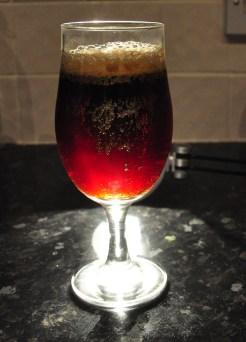 which I think pairs beautifully with the pumpkin and its accompanying spices. I’m too lazy to use a pumpkin from scratch, but canned will do just fine. In order to pull the most flavor out of it as possible, I’ve roasted the pulp at 350℉ for a good hour before adding it to the mash. This results in maillard reactions, lending a more multifaceted, rich, and complex pumpkin flavor.
With such a malt-forward beer, it’s important to choose other adjuncts that will compliment and enhance the already-complex flavor profile. As this beer is inspired by pumpkin pie, I’ve added small amounts of the traditional spices: cinnamon, nutmeg, allspice, ginger, and cloves (a very small amount of these, as they are quite potent and tend to overpower the more delicate flavors). For hops, I’ve picked German Smaragd, which is the slightly less-bitter cousin of Hallertau. These impart an earthy, slightly spicy bitterness to the beer, and just a hint of floral on the nose.
I’m very pleased with how this beer has turned out and look forward to surprising those who argue against pumpkin beers! In the end, the most important take-away from the Pumpkin Debate is that there are so many variations on this style that it is nearly impossible to find hate every one of them. Not enthused by the pumpkin ale the big box grocery store has on its shelves? Why not try your luck at a local microbrewery? Chances are, they, like me, have put a twist on the style in attempt to sway the nay-sayers!
 Beer Ye, Beer Ye!
This sounds delicious! Hey are you going to be doing any brewing at Outer Planet?
LikeLike
Yes! Just started – brewed up an Imperial Oatmeal Stout this week 🙂
LikeLike
Sounds delicious! You are definitely invited to our place for thanksgiving!
LikeLiked by 1 person